Author: Martins B.

  • Understanding SSL Basics: Securing Your Website

    Understanding SSL Basics: Securing Your Website

    Introduction

    In today’s digital age, website security is of paramount importance. With cyber threats lurking around every corner, it is crucial to establish secure connections and protect sensitive information. One technology that plays a significant role in ensuring website security is SSL (Secure Sockets Layer). In this article, we will delve into the basics of SSL, how it works, its benefits, and the process of implementing it on your website.

    What is SSL?

    SSL, or Secure Sockets Layer, is a security protocol that establishes an encrypted connection between a web server and a user’s browser. It ensures that the data transmitted between the two endpoints remains confidential and integral. Through SSL, sensitive information such as passwords, credit card details, and personal data is shielded from prying eyes.

    How SSL Works

    SSL Handshake Process

    When a user attempts to access a website secured with SSL, a handshake process takes place to establish a secure connection. The handshake involves a series of steps where the web server and the user’s browser verify each other’s identity, agree on encryption algorithms, and exchange encryption keys. This process ensures that both parties can communicate securely.

    Certificate Authorities (CAs)

    Certificate Authorities are entities entrusted with issuing SSL certificates. These certificates serve as digital credentials that verify the authenticity and legitimacy of a website. CAs play a vital role in establishing trust and ensuring that the SSL certificates are valid and reliable. Trusted CAs are included in web browsers and operating systems, which enables browsers to validate SSL certificates and display trust indicators.

    SSL Certificates

    SSL certificates are cryptographic files that bind together a website’s domain name and its public key. They contain information about the website owner, the validity period of the certificate, and the public key necessary for encryption. There are different types of SSL certificates available, such as Domain Validated (DV), Organization Validated (OV), and Extended Validation (EV), each offering varying levels of validation and trustworthiness.

    Encryption Algorithms

    SSL utilizes encryption algorithms to secure the data transmitted between the web server and the user’s browser. These algorithms, such as RSA, DSA, and ECC, ensure that the information is encrypted and can only be decrypted by the intended recipient. It is crucial to choose strong encryption algorithms to maintain a high level of security.

    Benefits of SSL

    Data Encryption

    One of the primary benefits of SSL is data encryption. By encrypting data during transmission, SSL safeguards sensitive information from being intercepted by malicious entities. It ensures that the data remains confidential and cannot be deciphered by unauthorized parties.

    Authentication and Trust

    SSL certificates play a crucial role in authenticating the identity of a website. When a website has an SSL certificate, it indicates that it has undergone a verification process by a trusted Certificate Authority. This authentication builds trust with visitors, assuring them that the website is legitimate and can be trusted with their information.

    Search Engine Optimization (SEO) Benefits

    Apart from security advantages, SSL also offers SEO benefits. Search engines, such as Google, prioritize websites with SSL certificates by ranking them higher in search results. By implementing SSL, website owners can improve their online visibility, attract more visitors, and enhance user perception of their brand.

    Implementing SSL on Your Website

    Selecting an SSL Certificate

    When choosing an SSL certificate provider, several factors should be considered. These include the level of validation required, the reputation and trustworthiness of the CA, customer support, and cost considerations. It is essential to select an SSL certificate that best suits your website’s needs.

    Generating a Certificate Signing Request (CSR)

    To obtain an SSL certificate, a Certificate Signing Request (CSR) needs to be generated on your web server. The CSR contains information about your website and is used by the CA to issue the SSL certificate. The process of generating a CSR varies depending on the web server you are using. Most web servers have built-in tools or plugins that simplify the CSR generation process. Once the CSR is generated, it is important to keep it secure and provide it to the chosen CA for certificate issuance.

    Installing and Configuring SSL Certificate

    After receiving the SSL certificate from the CA, it needs to be installed and configured on your web server. The installation process varies depending on the web server software you are using. For example, if you’re using Apache, you would typically need to copy the certificate files to the appropriate directory and update the server configuration files. Similarly, for Nginx or IIS, there are specific steps to follow for certificate installation and configuration.

    Testing and Troubleshooting

    Once the SSL certificate is installed, it is essential to test its implementation and ensure that it is working correctly. Several online tools and browser extensions are available to test SSL configurations and verify certificate installation. It is crucial to conduct thorough testing to confirm that the secure connection is established successfully and there are no errors or vulnerabilities. In case any issues arise, troubleshooting steps should be followed to identify and resolve the problem.

    Conclusion

    In conclusion, SSL is a fundamental technology for securing websites and protecting sensitive data. By establishing an encrypted connection between a web server and a user’s browser, SSL ensures the confidentiality and integrity of information transmitted online. With the numerous benefits SSL provides, including data encryption, authentication, trust, and SEO advantages, implementing SSL on your website is a crucial step towards a safer online experience for your visitors.

    Frequently Asked Questions (FAQ)

    Q1. What is the difference between HTTP and HTTPS?

    A1. HTTP stands for Hypertext Transfer Protocol, whereas HTTPS stands for Hypertext Transfer Protocol Secure. The key difference is that HTTPS utilizes SSL or TLS encryption to secure the data transmitted between the web server and the user’s browser, while HTTP does not provide encryption.

    Q2. How can I tell if a website is using SSL?

    A2. Websites using SSL can be identified by the presence of “https://” at the beginning of the URL instead of “http://.” Additionally, modern web browsers display a padlock icon or a “Secure” label next to the website address to indicate that the connection is secured with SSL.

    Q3. Do I need an SSL certificate for my website if I don’t handle sensitive information?

    A3. Yes, having an SSL certificate is recommended for all websites, regardless of the type of information they handle. SSL provides an additional layer of security, builds trust with visitors, and improves search engine rankings.

    Q4. How often do SSL certificates need to be renewed?

    A4. SSL certificates have a validity period, typically ranging from one to three years. It is essential to renew the certificate before it expires to maintain uninterrupted secure connections on your website.

    Q5. Can I use a free SSL certificate for my website?

    A5. Yes, there are free SSL certificate options available, such as Let’s Encrypt. These certificates are trusted by most modern browsers and offer basic encryption. However, for higher levels of validation and additional features, paid SSL certificates may be more suitable.

    By understanding SSL basics and following the proper implementation process, you can enhance the security of your website and provide a safe browsing experience for your visitors.
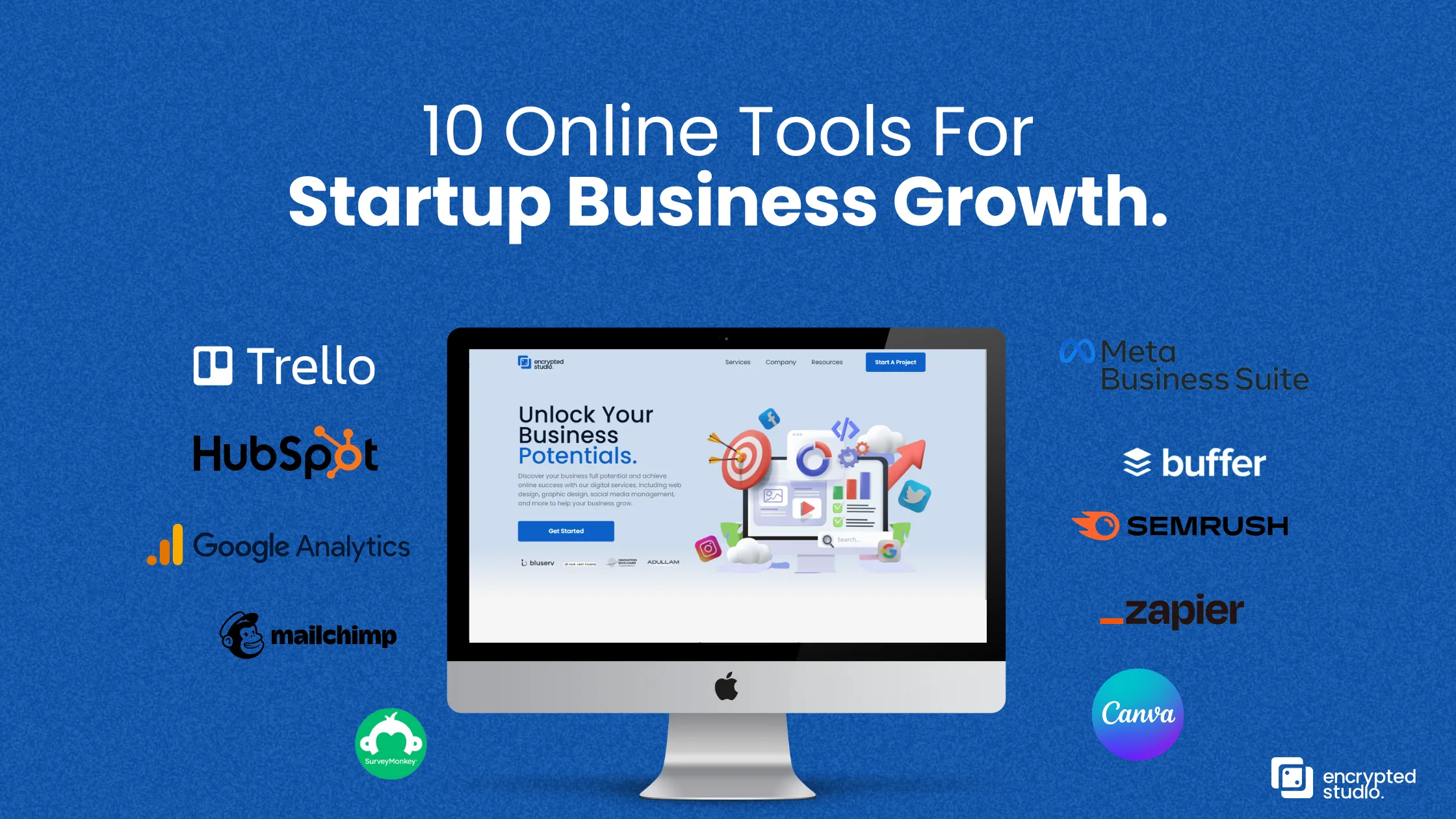
  • 10 tools every startup and small business must have.

    10 tools every startup and small business must have.

    Introduction

    If you’re an entrepreneur looking to grow your startup, you know how important it is to have the right tools in your arsenal. In today’s digital age, there are countless online resources available to help you reach your goals. But with so many options out there, it can be overwhelming to figure out which tools are worth investing your time and money in. That’s where we come in! In this article, we’ve compiled a list of the top 10 online growth tools that are sure to take your startup to the next level. From social media management to email marketing and beyond, these tools will help you streamline your operations, reach new customers, and maximize your potential. So, if you’re ready to take your business to the next level, keep reading to discover the top online growth tools that every entrepreneur needs in their toolkit.

    The Importance of Online Growth Tools for Startups

    As a startup founder, you are likely wearing many hats and juggling multiple tasks at once. Online growth tools can help you to automate tasks, streamline your operations, and save time. This, in turn, allows you to focus on the core aspects of your business, such as product development and customer acquisition.

    Moreover, online growth tools can help you to reach new customers and expand your business. Many of these tools are designed to help you optimize your website, improve your search engine rankings, and create engaging content. By leveraging these tools, you can attract more visitors to your site, convert them into customers, and increase your revenue.

    Top 10 Online Growth Tools for Startups

    Without further ado, let’s dive into the top 10 online growth tools for startups:

    1. HubSpot

    Hubspot is an all-in-one marketing automation tool that offers a comprehensive suite of features. It offers resources for lead generation, social media management, email marketing, and other tasks. With Hubspot, you can create and manage marketing campaigns, track website traffic, and analyze user behavior. The platform also offers a CRM system that allows you to manage your customer interactions and sales pipeline.

    One of the most significant benefits of using Hubspot is its ease of use. The platform is designed to be user-friendly, which means that you don’t need to be a marketing expert to use it. The platform also provides excellent customer support, which can help you resolve any issues quickly.

    Overall, Hubspot is an excellent tool for startups that want to streamline their marketing efforts. With its robust features and user-friendly interface, it’s an all-in-one solution that can help you grow your business.

    2. Google Analytics

    Google Analytics is a free web analytics tool that allows you to track and analyze data about your website’s visitors. You can view how many visitors have been to your site, where they are coming from, and which pages they are reading with Google Analytics.

    This information can help you to optimize your website and improve your user experience.

    For example, if you notice that a large percentage of your visitors are leaving your site after viewing a particular page, you may want to investigate why. It could be that the page is not engaging enough, or that there is a technical issue that needs to be fixed. By using Google Analytics, you can identify these issues and make the necessary changes to improve your site’s performance.

    3. Mailchimp

    Mailchimp is an email marketing solution that allows you to create and distribute email campaigns to your subscribers. With Mailchimp, you can create beautiful, professional-looking emails without any coding or design skills. You can also segment your subscribers based on their interests, behavior, and other criteria to ensure that your emails are targeted and relevant.

    Email marketing is a powerful tool for startups, as it allows you to stay in touch with your customers and keep them informed about your latest products and services. By using Mailchimp, you can automate your email campaigns, save time, and improve your customer engagement.

    4. Buffer

    Buffer is a social media scheduling and publishing application that works with a variety of social media networks. With Buffer, you can easily manage your social media presence and ensure that your content is being shared at optimal times.

    Social media is an important marketing channel for startups, as it allows you to reach new audiences and engage with your existing customers. By using Buffer, you can save time, streamline your social media operations, and improve your social media performance.

    5. Meta Business Suite

    Meta Business Suite is a comprehensive tool that provides a range of features for startups. It includes modules for project management, accounting, inventory management, and CRM. The platform is designed to be user-friendly, which means that you don’t need to be a tech expert to use it.

    One of the most significant benefits of using Meta Business Suite is its scalability. The platform can support companies of all sizes, from little startups to large organizations. Additionally, the platform provides excellent customer support, which can help you resolve any issues quickly.

    Overall, Meta Business Suite is an excellent tool for startups that want to streamline their business operations. With its comprehensive features and user-friendly interface, it’s a platform that can help you grow your business.

    6. SEMrush

    SEMrush is a search engine optimization (SEO) tool that allows you to analyze your website’s performance in search engines. With SEMrush, you can see how your site is ranking for various keywords, identify new keyword opportunities, and analyze your competitors’ SEO strategies.

    SEO is an important aspect of online growth, as it allows you to attract more traffic to your site and improve your visibility in search engines. By using SEMrush, you can optimize your site for search engines, improve your rankings, and drive more traffic to your site.

    7. Canva

    Canva is a graphic design tool that allows you to create professional-looking graphics without any design skills. With Canva, you can create social media posts, infographics, presentations, and more.

    Visual content is an important aspect of online marketing, as it can help you engage your audience and create a memorable brand identity. By using Canva, you can create eye-catching graphics that stand out from the competition and help you achieve your marketing goals.

    8. Zapier

    Important tools-Zapier

    Zapier is an automation tool that allows you to connect various apps and services together. With Zapier, you can automate repetitive tasks, such as data entry and file management, and integrate your various tools and systems.

    Automation is an important aspect of online growth, as it can help you to save time and streamline your operations. By using Zapier, you can automate your workflows, reduce errors, and improve your productivity.

    9. Trello

    Trello is a project management tool that allows you to organize your tasks and projects visually. With Trello, you can create boards, lists, and cards to track your progress and collaborate with your team.

    Project management is an important aspect of online growth. It allows you to stay organized and focused on your goals. By using Trello, you can manage your tasks, track your progress, and ensure that your projects are completed on time and within budget.

    10. SurveyMonkey

    SurveyMonkey is an online survey platform that enables individuals and businesses to create and distribute surveys to collect valuable feedback from their target audience. This tool has gained popularity as a tool for conducting surveys and obtaining data because of its user-friendly interface and wealth of capabilities.

    Customer feedback plays a crucial role in the success of any business. It provides valuable insights into customer preferences, satisfaction levels, and areas for improvement.

    Conclusion

    Online growth tools are essential for startups looking to maximize their potential and reach new customers. By leveraging these tools, you can automate tasks, streamline your operations, and improve your marketing performance. From Hubspot to SurveyMonkey, there are countless tools available to help you achieve your goals. So, if you’re ready to take your startup to the next level, start exploring these online growth tools today!

    In our next article, we will be diving deeply into each feature of these tools so sign up for our Newsletter to be updated when the well-detailed article is uploaded.

  • The AI revolution in business operations.

    The AI revolution in business operations.

    Introduction

    Artificial intelligence (AI) has transformed business operations by boosting the efficacy and productivity of workflows. Businesses can now analyze large volumes of data, generate forecasts, automate tasks, and make better decisions thanks to AI. As a result, businesses from all industries are implementing AI to remain competitive in the digital economy. This article looks at how AI is transforming business operations and how it might enhance their success in the current digital world.

    A. Overview of AI and its Benefits in Business Operations

    Artificial intelligence (AI) is a technology that mimics human intelligence in order to solve complex problems. AI algorithms can learn from data, recognize patterns, and make predictions based on them. AI can automate repetitive tasks, improve decision-making, and provide insights for strategic planning in business operations.

    One of the most important advantages of AI is its ability to analyze large amounts of data quickly and accurately. This is especially useful in industries where large amounts of data are generated on a daily basis, such as healthcare, finance, and manufacturing. Businesses can gain insights into customer behavior, market trends, and operational efficiency by utilizing AI.

    B. Explanation of How AI is Transforming Industries

    Artificial intelligence (AI) is transforming industries by enabling businesses to automate tasks and make data-driven decisions. In healthcare, for example, AI-powered diagnostic tools and decision support systems can improve diagnostic accuracy and speed, resulting in better patient outcomes. AI is being used in finance to detect fraudulent transactions and optimize investment portfolios. In the manufacturing industry, artificial intelligence (AI) can predict equipment failures before they occur, reducing downtime and maintenance costs.

    AI is also boosting improvements in business tools and services. Chatbots and virtual assistants are becoming more common in customer service, where they provide faster and more personalized assistance. AI-powered supply chain management tools improve logistics while lowering costs. AI is also transforming marketing and advertising, with personalized content creation and automated social media analytics.


    AI in Industry-specific Business Operations

    A. Healthcare

    Healthcare is one of the most data-intensive industries, with massive amounts of data generated daily. The application of artificial intelligence (AI) in healthcare is transforming the industry by automating tasks, improving diagnosis accuracy, and improving patient outcomes.

    1. Diagnosis and Treatment

    AI-powered diagnostic tools and systems for decision support enhance the accuracy and effectiveness of diagnosis and treatment. These systems gather patient information and medical records to provide healthcare providers with insights and recommendations. This helps to improve diagnosis and treatment accuracy, minimize the potential of errors, and improve patient outcomes.

    Another area where AI is making a major difference is precision medicine. AI algorithms can analyze massive amounts of patient data to pinpoint patterns and predict possible health issues. This allows healthcare providers to create personalized treatment plans that are tailored to each patient’s specific needs. Precision medicine has the potential to transform healthcare by improving clinical outcomes and lowering costs.

    2. Medical Imaging

    In medical imaging, AI is also being used to process image interpretation and analysis. AI algorithms can detect anomalies in medical images such as X-rays, MRIs, and CT scans that human medical experts may miss. This results in faster and more accurate diagnoses, allowing healthcare providers to engage as soon as possible when necessary.

    Another area where AI is having a significant impact is in disease detection and diagnosis. AI algorithms can analyze medical images as well as other patient data to detect early signs of disease. This makes it possible to detect and treat diseases early, enhancing patient results and lowering healthcare costs.

    B. Finance

    By automating manual procedures, increasing decision-making, and improving client experiences, AI is changing the world of finance.

    1. Detecting and preventing fraud

    Financial organizations can recognize and stop fraud because to AI algorithms’ ability to analyze massive amounts of data in real time. These algorithms can spot patterns and abnormalities that human analysts might overlook, lowering the risk of fraud and preventing losses of millions of funds.

    2. Trading and Investment

    Trading platforms with AI capabilities may analyze market data and spot trends, empowering investors to make better choices. These technologies can also automatically complete trades, lowering the possibility of human error and enhancing trading efficiency.

    C. Manufacturing

    To improve production, efficiency, and product quality, the manufacturing industry is rapidly adopting artificial intelligence (AI). AI-driven tools are being utilized to automate production, minimize downtime, and guarantee constant product quality.

    1. Predictive Maintenance

    Predictive maintenance is one of the most important uses of AI in manufacturing. AI-powered machine learning algorithms can examine data from sensors and other sources to forecast when machines are likely to malfunction. With the ability to do preventive maintenance, firms can increase productivity and decrease downtime.

    2. Quality Control

    Quality control is a significant area of AI in the industry. Automated flaw detection systems use AI algorithms to examine product photos and find flaws that human inspectors might miss. This aids producers in enhancing product quality and reducing waste.


    AI-powered Business Tools and Services

    Businesses are beginning to employ AI-powered tools and services to optimize operations and boost customer satisfaction as AI technology evolves. Here are three major cases:

    A. Chatbots

    AI-powered chatbots are computer systems that can mimic human speech. They are frequently utilized in customer service to offer prompt and effective answers to client queries. Chatbots can be configured to conduct transactions as well as respond to frequently asked queries and make product suggestions.

    B. Virtual Assistants

    Another sort of AI-powered tool that can assist businesses in optimizing their processes is the virtual assistant, such as Google Assistant, Bixby, Siri, or Alexa. Meeting scheduling, email sending, and managing finances are just a few of the many activities that virtual assistants are capable of handling. Businesses can save time and concentrate on more important initiatives by automating these operations.

    C. Supply Chain Management

    Coordinating the movement of products and services from suppliers to consumers is a complex process known as supply chain management. By providing real-time data on inventory levels, demand projections, and shipping logistics, AI-powered supply chain management systems can assist firms in optimizing this process. Businesses can reduce waste and make decisions more quickly and intelligently as a result.


    AI for Business Growth

    AI technology delivers new prospects for growth for businesses in addition to simplifying procedures and increasing efficiency. Here are two essential ways that AI can be applied to raise customer engagement and promote business growth:

    A. Customer Engagement

    Building a trusted brand and boosting revenue both rely on customer engagement. By offering personalized guidance and targeted marketing actions, AI-powered technologies can assist businesses in strengthening their client engagement campaigns.

    1. Personalization

    Tailoring details and marketing messages to specific customers based on their interests and behavior is the process of Personalization. AI algorithms can use client information, such as browsing history and purchasing patterns, to develop tailored product and service suggestions. This enables companies/businesses to offer their clients a more tailored and relevant experience, boosting their satisfaction and trust.

    2. Recommendations

    Another AI-powered technology that can assist businesses in enhancing consumer interaction is a recommendation engine. Recommendation engines can make targeted suggestions for goods and services that clients are probably interested in by evaluating customer data. Customers may believe their demands and preferences are being addressed, which could improve sales and customer satisfaction.

    B. Marketing and Advertising

    Marketing and advertising are key components of every successful business plan. Businesses now have access to profitable tools and services that may help them maximize their marketing and advertising efforts thanks to the development of AI technology.  instances of the uses of AI in marketing and advertising include;

    1. Content Creation

    Content creation is another essential component of every successful marketing strategy, but it can be time-consuming and knowledge-intensive. AI-powered content creation tools can help businesses generate high-quality, engaging content more efficiently by analyzing data on audience preferences, competitor content, and other factors.

    2. Social Media Analytics

    Although social media platforms such as Facebook, Twitter, and Instagram are effective marketing channels, analyzing and acting on the massive amounts of data generated by these platforms can be difficult. Artificial intelligence (AI)-powered social media analytics solutions can assist organizations in making sense of this data and identifying trends and insights that can inform their marketing approach. To assist organizations in optimizing their social media marketing efforts, these tools may evaluate data on audience demographics, engagement rates, and other aspects.


    Challenges of AI Adoption in Business Operations

    While AI technology has many benefits to businesses, it also has a number of challenges that must be overcome in order to successfully adopt and implement AI solutions.

    A. Regulatory Challenges

    1. Compliance with data privacy and security regulations

    One of the most challenging aspects of implementing AI in business operations is maintaining compliance with data privacy and security requirements. Artificial intelligence systems sometimes require access to vast volumes of data, which might be sensitive or personal. As a result, companies or businesses must verify that their AI systems are created and executed in accordance with applicable rules, such as the GDPR in Europe or the CCPA in California.

    2. Ethical considerations of AI use

    Addressing ethical concerns about AI use is another regulatory challenge of AI adoption in business operations. Algorithmic bias, transparency, and accountability are examples of such challenges. Businesses must guarantee that their artificial intelligence systems are created and implemented in a fair, transparent, and responsible manner and that they do not perpetuate or magnify existing biases or discrimination.

    B. Data Privacy Concerns

    1. Protection of sensitive data and personal information

    As AI systems become more common in business operations, the amount of data gathered and analyzed increases. This includes sensitive information such as financial records, medical records, and personal information. Businesses must safeguard this information against illegal access or use. They must guarantee that adequate data security measures, such as encryption and access restrictions, are in place and that data is only accessed by authorized employees.

    2. Data breaches and cyber threats

    Data breaches and cyber threats are becoming increasingly problematic for businesses of all sizes. The potential for breaches and cyber attacks grows as more data is collected and kept in AI systems. Businesses must use firewalls, and intrusion detection systems, and watch for unusual behavior to safeguard their systems from these dangers. They must also have a plan in place for dealing with a breach, which includes alerting affected parties and taking steps to limit harm.

    C. Technical Challenges

    1. Integration with Legacy Systems and Applications

    Integrating new AI-powered systems and apps with legacy systems is one of the difficulties of AI usage. Legacy systems are frequently built with outdated technology and may not be designed to work with new AI solutions. This can make integration difficult and time-consuming, requiring large investments in IT resources and equipment.

    2. Lack of Skilled Talent for AI Implementation and Management

    Another issue is a lack of skilled talent for the application of AI and management. AI technology is still in its early stages, and there is a scarcity of specialists with the essential skills and experience to effectively adopt and manage AI solutions. This can result in adoption delays, higher costs, and possible errors or inefficiencies in AI-powered operations.


    Conclusion

    A. Summary of key points

    In this article, we looked at how artificial intelligence is changing the way businesses operate. AI-powered products and services are assisting organizations in becoming more effective, productive, and customer-focused, from boosting customer service with chatbots and virtual assistants to optimizing supply chain management with real-time data analysis. AI is now being applied in a variety of industries, from healthcare to manufacturing, to improve decision-making, increase safety, and reduce expenses.

    B. Final thoughts on the future of AI in business operations

    As AI technology advances, we should expect to see even more inventive solutions that will assist businesses in staying ahead of the competition. AI will become more integrated into daily company operations, allowing companies and businesses to automate repetitive processes, improve decision-making, and create personalized experiences for customers. However, as the use of AI grows, so does the need for ethical considerations, transparency, and responsible data use. As AI continues to shape the future of company operations, it is critical for firms to stay aware and ahead of potential difficulties.

    In conclusion, artificial intelligence (AI) has the potential to alter the way businesses operate, bringing multiple benefits to both enterprises and customers. Businesses can become more efficient, productive, and customer-focused by embracing AI-powered tools and services. However, like with any technology, it is critical to approach AI with caution and responsibility, ensuring that it is employed in a manner consistent with ethical and social issues.

  • Online Business: Steps to Create a Successful Online Business

    Online Business: Steps to Create a Successful Online Business

    Introduction

    Launching an online business is an excellent way to become an entrepreneur and reach financial independence. With the growth of the internet and the rise in online customers and buyers, more people are choosing to launch online businesses. Yet beginning an online or internet business may be difficult, especially for beginners. In this article, we’ll walk you through the process of starting a profitable Internet business in this post.


    Benefits and Challenges of Starting a Business Online

    There are several advantages to starting an online business.  One of the most significant advantages is the low cost of entry.  Online enterprises may be started with far lower startup costs than traditional businesses. An online business also gives you the freedom to operate from any location, at any time, and with anybody.

    Starting an internet business, however, is not without its difficulties. The high degree of competition is one of the biggest obstacles. Because there are so many online businesses, it can be challenging to stand out. To draw in and keep clients, you’ll also need to have great web marketing capabilities.


    Steps To Consider When Starting Your Business Online


    Step 1 – Research & Find Your Niche Market

    It’s important to do your study and identify your target market before you launch your online business. A niche market is a tiny portion of the market with particular wants and demands. You may develop a good or service that meets your target market’s wants and preferences by identifying it.

    You may carry out specific market research to identify your niche market. To find popular subjects and trends, you may utilize various tools including Google Trends, Facebook Audience Insights, Pinterest, and Reddit. After you’ve determined your target market, you may develop a good or service that appeals to them.


    Step 2 – Build Your Brand Identity & Website

    The development of your website and brand identification is essential for the success of your online business. Your brand name, logo, and other visually distinctive components make up your brand identity. A brand identity kit may assist you in giving your business image a unified, polished appearance.

    It’s important to keep your website basic and user-friendly while developing it. Your website needs to be simple to use and have an obvious call to action. To increase traffic, you should also optimize your website for search engines.


    Step 3 – Choose the Right E-commerce Platform for Your Business

    If you are running an online e-commerce business, your online business success also depends on selecting the best e-commerce platform. E-commerce platforms like Shopify, WordPress(WooCommerce), and Wix are among the options. Selecting the platform that is best for your business is crucial since each one has benefits and drawbacks.

    Shopify is a fantastic option for small businesses looking for a user-friendly platform with lots of functionality. Although WordPress is a more complicated platform that calls for technical expertise, it is also more adaptable and configurable. Wix is a user-friendly platform ideal for small businesses seeking a straightforward website with fundamental e-commerce functionalities.


    Step 4 – Setup Payment Systems & Secure Your Website

    Setting up payment systems and securing your website is essential to the success of your online business.

    You must choose a payment gateway that is appropriate for your business. PayPal, Stripe, and Square are a few of the well-known payment processors. Flutterwave and Paystack are two other regional (Nigerian) payment gateways.

    To safeguard the sensitive information of your customers, you must secure your website. To protect your website, you may employ two-factor authentication, SSL (Secure Sockets Layer) encryption, and other security methods or third-party applications


    Conclusion.

    Online business startups might be difficult, but with the appropriate strategies, you can build a profitable online enterprise. You may start a successful online business by doing your research, identifying your specialized market, selecting the best e-commerce platform, developing your brand identity and website, setting up payment methods, and safeguarding your website.


    Are you prepared to begin creating your website and brand identity? Contact a professional creative agency now to get started building a unique brand and website today!